Reading the river record
Longer essays on the Mojave War and the years around it. Each one is tied to a document you can open: an Army report, an emigrant letter, a statute, or a study that prints Mojave testimony.
When the Birds Go Silent is historical narrative built on this history. These essays stay with the record, and they say when the record splits. For the short version, start with the real history.
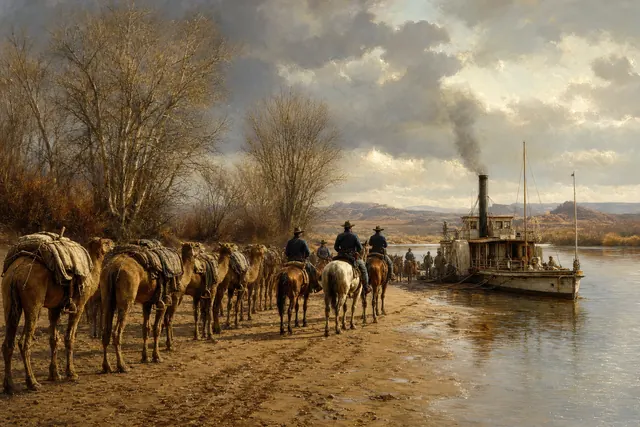 1857-1858
Beale's road, written at the campfire
What House Executive Document 124 actually says about the 35th-parallel road, the imported camels, and the morning Beale found a steamer at the crossing.
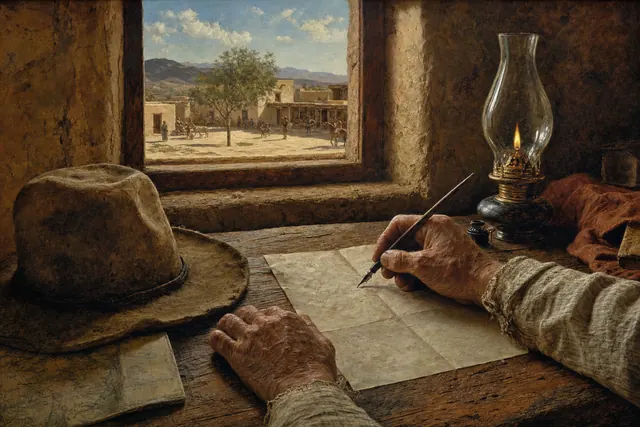 August 1858
What Rose wrote home from Albuquerque
A close reading of Rose's 1858 letter: who was in the two parties, what happened at the river, and what he could not yet know about the Bentner family.
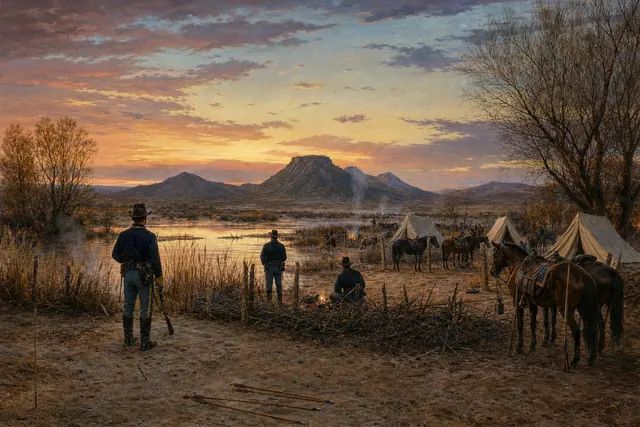 1858-1859
Four arrows into a closed camp
How a closed camp, four arrows, and General Clarke's hostage order became Fort Mojave, and why Armistead's rank is written two ways.
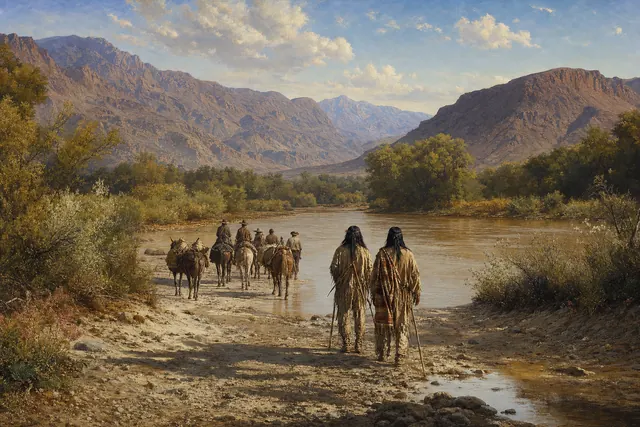 1854-1864
A head level with the mule
What Whipple and Ives actually wrote about Cairook and Irataba, and what the 1864 trip rests on.
 Summer 1859
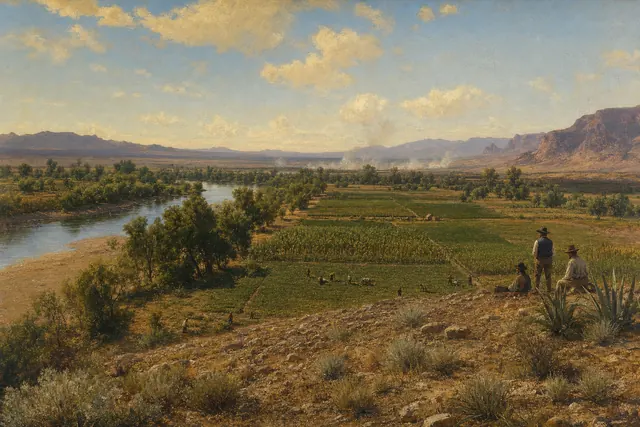
Twenty-three bodies, three wounded soldiers
What Casebier and the Kroebers, through the Park Service overview, actually report about the fight, and which famous details are not in that paragraph.
 1857-1858
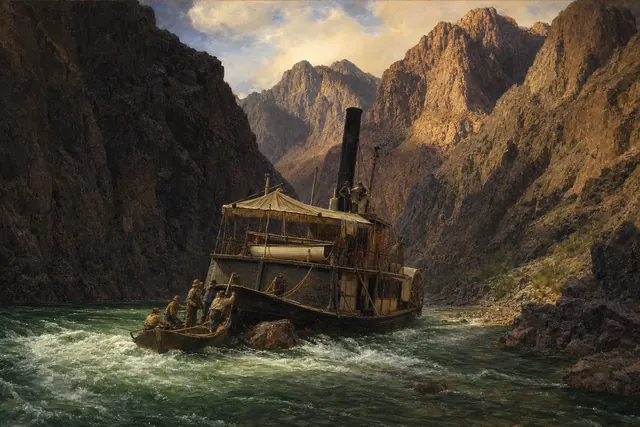
The rock that missed the hull
How Ives had the Explorer built, who was on her, and what he wrote when he finally saw the Mojave Valley in February 1858.
 1853-1854
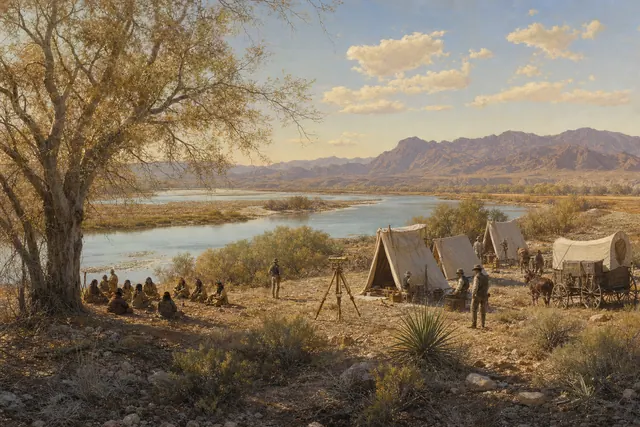
Five chiefs, and a road that was still a proposal
Whipple's own figures for arable land, his two guides' names, and the February 1854 council as Sherer reconstructs it.
 Before 1858
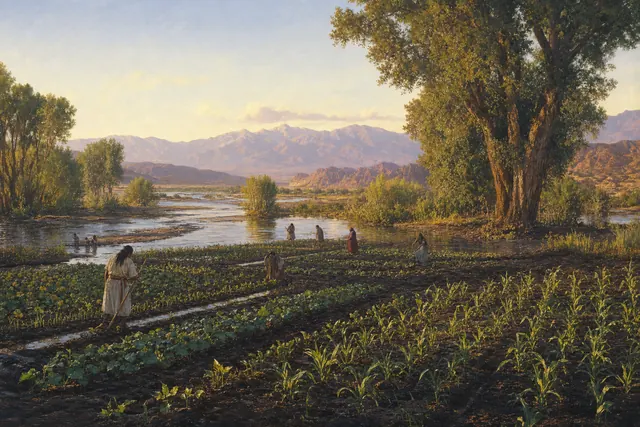
Planted when the river fell
What Oñate's party was fed, what Kroeber described of the floodplain cycle, and what Ives saw in the valley in February 1858.
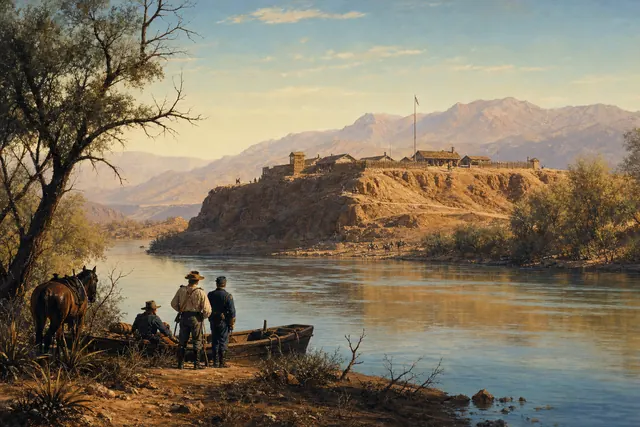 Late June 1859
Eight or nine, or exactly nine
A comparison of Ives's 1861 footnote on Cairook's death with Sherer's count of nine hostages and three who got home.
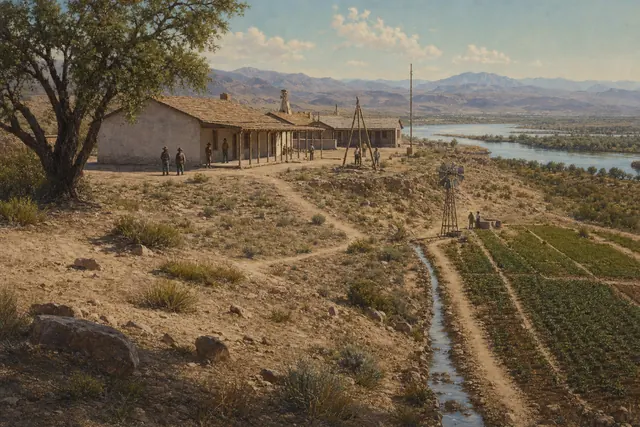 1890-1893
Eight inches of bottom soil on the mesa
What Maribel Estrada Calderón documents about the school's fields, the boys who would not dig, and the pump that arrived in March 1892.
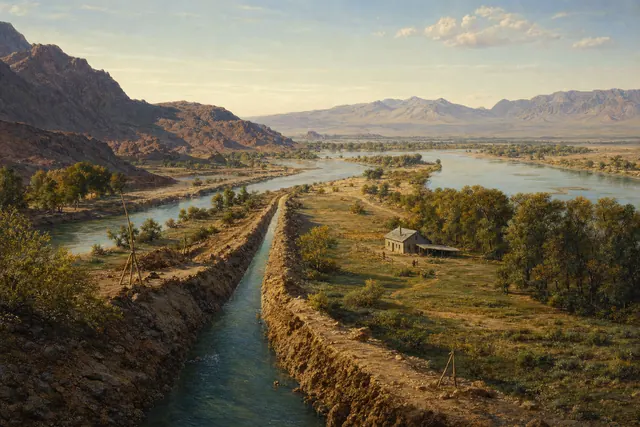 1865-1911
A statute, not an order with Lincoln's name on it
The 1865 act as the Supreme Court quoted it, Grant's later boundary orders, and why some Mojave never left the valley at Fort Mojave.
 Method
Open the page before you trust the sentence
What this site checked and what it refused to repeat.